
Auditor
ISTJ
Introversion | Sensing | Thinking | Judging
Essence:
A personality type that perceives the world through logic and internal consistency — working to understand how things are built, spot the inconsistencies, and put them in order.
Key Trait:
The most solid personality type. An ability to see quickly where the logic has broken down and correct it precisely — levelling things out, simplifying, making everything clear.
Environment:
Thrives where there are complex processes to analyse, order, and bring to clarity. Work with systems, rules, and data suits well, wherever precision, logic, and consistency matter.
Harder in an environment of chaos, in uncertainty with no structure, and wherever decisions are made on emotion rather than on logic and fact.
I — Introversion
Attention is directed inward — toward one’s own thoughts, analysis, and the internal logic of what is happening.
S — Sensing
The focus falls on specifics and reality: facts, details, how things actually work in practice.
T — Thinking
Decisions are made through logic — everything needs to be consistent, well grounded, and free of contradiction.
J — Judging
A drive toward order, certainty, and clear decisions — understanding what the right way is and securing the result.
Auditor (ISTJ) perceives the world through internal logic and systemic consistency. Attention focuses naturally on the structure of things: how the elements connect to one another, where discrepancies appear, and what falls outside the general algorithm.
Any incoming information undergoes an immediate check for reliability and freedom from contradiction. A need for clarification arises whenever data will not fit the logical picture, calling for the system to be brought to a common denominator.
This analytical approach is inseparable from objective reality. It matters to Auditor not only to understand the principle by which something is built but to confirm its practical effectiveness.
Material durability and the capacity of a chosen method to deliver a concrete result become significant criteria of assessment. This produces a characteristic combination of intellectual precision and force of will: the drive toward order is always backed here by a readiness to carry a process through to completion.
Auditor’s internal foundation makes it possible to stay firm and consistent in implementing decisions already made. In difficult circumstances there is no loss of bearings — on the contrary, forces get mobilised, and pressure is answered with heightened concentration.
Influence over a situation is direct and deliberate: when necessary, Auditor is capable of firmness, of holding the boundaries that have been set, and of insisting that procedures are followed for the sake of the goal.
The ability to take on responsibility and organise processes is realised through creating clarity and establishing clear requirements. Auditor manages not through emotional influence but through a logical account of how a system ought to function.
Difficult tasks and external resistance do not suppress this person but draw them into the process, bringing a sense that their qualities are genuinely needed. In conditions where others might retreat before uncertainty, Auditor rests on a considered position and on the ability to turn theory into a result that actually works.
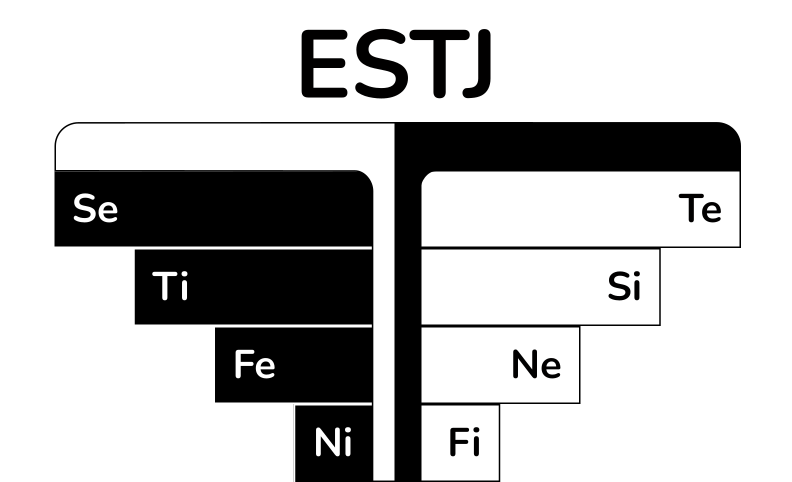 In Typeonics we view personality as a system of eight cognitive functions — ways of perceiving and processing information.
Everyone uses all eight, but each of us does so differently: some come naturally and easily, some switch on depending on the situation, and some take more effort.
What matters here is not only how well developed a cognitive function is, but how close it feels to you.
Some functions feel like your own — they hold your interest, you want to lean on them, and information that comes through them is taken in readily and with enthusiasm. We call these the Core Functions.
Other functions are not a priority: they may work perfectly well, but they usually switch on out of necessity and never feel like a natural place to stand. These are the Background Functions.
In your model these two groups are separated: one set covers what matters and interests you, the other covers what you tend to run on autopilot or ignore/avoid.
Below is the individual configuration of Auditor’s (ISTJ) cognitive functions and how each of them shows up in life.
Core Functions
Superpower
Introverted Thinking (Ti / Structure)
Introverted Thinking (Ti) serves as the foundation through which Auditor (ISTJ) puts reality in order. What holds attention here is not an external fact in itself but its internal logic and systemic soundness: information is accepted only once it has passed a test for sense and freedom from contradiction.
The process of understanding is built on decomposition: any object or idea gets taken apart into its components to reveal the hidden connections and operating principles. That analysis produces a detailed structure with no accidental elements or blurred zones in it. This intellectual process is autonomous and independent of external pressure — logical soundness outranks received opinion or authoritative pronouncement.
From that autonomy comes an uncompromising demand for precision of definition. Auditor permits no approximation; every detail must be verified and fitted into the overall picture with no logical gaps. There is no need, however, to impose that correctness on anyone. Internal clarity and a grasp of the substance are enough for confidence, and discussion registers purely as an instrument for finding the truth rather than a means of emotional dominance.
The need for structure projects inevitably onto the material world and daily life. Logic for Auditor is not only a matter of abstract schemas but of physical order in a space. Surroundings should be organised rationally: every object has a strictly defined place and a clear function. Aesthetics here is identical with economy — clean lines, convenience, and an absence of informational noise are what count in daily life. Excess registers as an error in the system, to be eliminated in order to maintain clarity.
The principle of rationality extends to relationships as well. Auditor values transparency and directness; interaction should be predictable and well founded. Emotional overlay and things left unsaid are cut away as inefficient interference. Closeness here is built on clear agreements and observed mutual boundaries — producing a reliable construction with no room in it for chaos or superfluous interpretation.
This cognitive function turns chaos into a system, making complex processes comprehensible and tangled situations manageable. In practical work it shows as an ability to localise an error instantly and restore a mechanism or an algorithm to working order.
Introverted Thinking becomes a superpower by creating an internal frame of reference that holds steady regardless of how changeable external circumstances become.
Tool
Extraverted Sensing (Se / Power)
Extraverted Sensing (Se) serves as the instrument for translating internal logical schemas into physical reality. This function allows Auditor (ISTJ) not only to analyse how the world is built but to act on it, turning theoretical order into a tangible result.
Perception in this mode becomes thoroughly pragmatic. Attention focuses on objective facts, resources, and current possibilities. Extraverted Sensing is what makes an instant assessment of other people’s strength possible. Auditor is highly sensitive to displays of will, reading both a person’s outward capacity for influence and their internal steadiness without error. This analytical radar makes it possible to establish the balance of forces in any situation precisely.
This perception produces an unconditional respect for hierarchy. Structured authority and chain of command are for Auditor a natural extension of logical order, which is why established ranks are observed strictly and the same is expected of everyone else. A clear grasp of one’s place in a system and the limits of one’s responsibility provides stability to the processes under management. Another facet of this function is a firm division of one’s surroundings into insiders and outsiders. That filter determines the degree of loyalty: toward the inner circle Auditor shows absolute devotion and a readiness to do whatever is needed to support their interests.
Extraverted Sensing is also where the personality’s capacity for will is realised. This is not impulsive aggression but disciplined, directed force. A decision once made is backed by an ability to sustain prolonged effort and overcome resistance from the environment step by step. Auditor is capable of firmness and of insisting on a position when the logic of a task requires it. That pressure is always controlled and proportionate — force is used as a precise surgical instrument for restoring order and holding the boundaries that have been set. It is not scattered about but applied in the quantity needed to achieve a specific goal.
The function also determines a relationship to the sensory world through a drive toward clean lines, precision of form, and outward harmony. Attention settles on the aesthetics and quality of the physical environment, but without any inclination toward excess. Visual order and good materials matter as material confirmation that the system is sound.
Material markers of success — status, financial stability, the quality of one’s possessions — serve as objective proof that the chosen path is the right one. Combining precision of thought with physical will, a sense of hierarchy, and an eye for aesthetics, Auditor does not merely observe the world but rebuilds it effectively, creating a reality that is both well made and logically verified.
Drive
Introverted Intuition (Ni / Time)
Introverted Intuition (Ni) is not a foundation for Auditor (ISTJ), but it does produce a lasting interest in the category of time — in how processes develop and how the various stages of events connect to one another. That pull shows as a wish to trace the evolution of things and understand the hidden logic of change.
The function’s interest runs both backward and forward. History, the biographies of remarkable people, and large-scale real events all produce a live response. Auditor works to decipher the patterns behind success or collapse, identifying cause and effect: which decisions, taken at which turning points, led to the final outcome. Analysis of this kind generates intellectual energy and makes it possible to see a situation in fuller dimension.
Engaging with the subject of time brings a sense of drive. Conversations about long-term scenarios, the courses lives take, and directions of development switch Auditor’s attention on and widen that perception.
This intuitive clarity is often unstable, however: a whole sense of how things will turn out is difficult to fix in place and break down into the usual logical components. That produces a liking for people who navigate long-range prospects confidently and can feel the right moment precisely.
The drive to anticipate consequences and calculate risk is an important part of planning. Under an excess of uncertainty, though, this function can become a source of doubt.
When the number of what-if options passes a critical mass, it starts to obstruct productive work. In those moments Auditor returns, naturally enough, to the primary foundation — facts, figures, and verifiable structures.
Introverted Intuition, then, does not determine the strategy behind decisions, but it adds necessary depth to Auditor’s view of the world. It acts as a drive — a territory that engages and inspires, allowing this person to move beyond the present moment while keeping a connection to objective reality.
Need
Extraverted Feeling (Fe / Emotions)
Extraverted Feeling (Fe) is for Auditor (ISTJ) a territory of attraction, though without any clear internal confidence. There is a marked interest in emotional climate and in live human response, yet steering those processes from within is difficult.
Auditor’s own emotions often stay at the periphery of attention and are expressed outwardly with great caution. The main difficulty lies in finding a precise and appropriate form for them, which frequently produces outward restraint or a pointed neutrality.
For all that outward reserve, Auditor needs a good emotional environment. The absence of live, warm contact leads to a sense of internal dryness and estrangement.
That deficit is usually made up through the people around: Auditor is drawn to those who can create a mood naturally, defuse a situation, and sustain an open, friendly atmosphere. Partners like these register as guides into the world of feeling, whose ease and legibility in contact relieve Auditor of the need to regulate the emotional background unaided.
There is a clear limit to what can be absorbed, however: excessive emotionality, dramatisation, or insistent picking over a relationship drains the reserves quickly. The optimal format is a live but unobtrusive response with no pressure in it. When the people around take on the emotional side of an exchange, Auditor becomes more relaxed and more natural.
Extraverted Feeling works here as a need — an important area of experience a person cannot fully provide for themselves but wants to receive from outside.
Through contact with emotionally open people, Auditor’s life acquires the fullness it needs, complementing strict logic with a living human dimension.
Background Functions
Resource
Introverted Sensing (Si / Comfort)
Introverted Sensing (Si) gives Auditor (ISTJ) a deep foundation in the material and physical world. This function rarely becomes a topic of conversation, yet it is precisely what produces internal steadiness and the sense of an ordered, well-assembled life.
Attention here concentrates on specific physical signals: how one feels, how comfortable something is, the quality of textures and flavours. Auditor has a precise sense of quality, expressed not as a pull toward luxury but as a need for soundness and appropriateness. Objects and spaces should be functional and free of excess — the state of being as it should be is reached by removing what is superfluous and concentrating on the essentials.
This function is realised silently. Auditor does not discourse on aesthetics or comfort but builds them methodically in practice. The ability to organise daily life shows in eliminating irritating small problems and working carefully through the details that make comfort possible. That activity extends to close people too, creating an atmosphere of basic reliability and physical wellbeing around Auditor.
In intensity, Introverted Sensing is comparable to the Superpower, but it shows exclusively through action and tangible result. High sensitivity to the material environment makes any carelessness — poor food, disorder — a source of internal discomfort, even when it is never voiced. It matters critically to Auditor that surrounding reality be of good quality and predictable.
This resource serves as a quiet base for the overall state of the personality. A well-organised environment restores strength and provides the clarity needed for large tasks. Introverted Sensing becomes a Resource because it allows Auditor to create a stable, functional reality, conveying care and reliability through concrete deeds.
Filter
Extraverted Thinking (Te / Actions)
Extraverted Thinking (Te) acts as a strict external filter through which Auditor (ISTJ) assesses the practical viability of any process. Internal logic alone is not enough; the decisive criterion is objective effectiveness: does this work in reality, and what is the applied value of the result?
Any activity with no concrete output is cut away as pointless. Theorising for its own sake and drawn-out discussion with no clear conclusion register as noise in the system. When an action produces no tangible result, interest in it disappears instantly and resources are redirected toward more useful tasks.
This filter activates automatically on contact with working processes. Any unjustified complexity or low efficiency provokes internal resistance and a need to simplify the structure and make it maximally functional. Auditor does not necessarily want to do everything personally, but cannot ignore pointlessness in other people’s actions and works to bring them to a logical conclusion.
The people around are assessed through the same lens of productivity. Those inclined toward talk without delivery, or unable to carry things through, are identified as unreliable. That assessment happens fast and is not revisited, creating distance between Auditor and anyone whose actions are ineffective.
In situations that demand high responsibility and adherence to deadlines, the filter intensifies. Extraverted Thinking sets strict criteria for reality: it determines what has earned the right to exist and what should be excluded as ballast. Through this mechanism Auditor ensures that only the tools and approaches that genuinely deliver remain in view.
Mask
Introverted Feeling (Fi / Relationships)
In external interaction, Auditor (ISTJ) projects the image of a person with unshakeable principles and a carefully considered attitude toward others. This produces a durable social reputation: Auditor is read as someone with a reliable internal code, for whom decency and keeping one’s word are unconditional. Ethical standards show here not through slogans but through a natural observance of boundaries and respect for commitments taken on.
For all that outward ethical clarity, the territory of feeling is not a foundation here. Auditor is not inclined toward constant analysis of emotional states or discussion of the finer points of a relationship.
Personal attitudes toward people crystallise internally and are rarely brought out without objective necessity. This makes it possible to keep the necessary distance and avoid ambiguity in contact: Auditor’s structure of connections usually holds a firm division between insiders and outsiders, with no intermediate, blurred states.
Auditor’s emotional depth sits behind a facade of reserve. Real attachment or antipathy is expressed not in words but in concrete actions and in the degree of involvement in someone’s affairs. That closedness can be mistakenly read as coldness, when behind it lies only a disinclination to display vulnerability or spend resources on empty sentimentality.
Introverted Feeling (Fi) serves as an instrument of social navigation. It sets the parameters of closeness and forms a profile legible to everyone: a reliable, predictable, principled person.
This cognitive function works as a mask — a structured form of self-presentation that makes effective interaction with society possible while preserving internal autonomy and the primacy of logical thinking.
Trigger
Extraverted Intuition (Ne / Possibilities)
Extraverted Intuition (Ne) is bound up for Auditor (ISTJ) with the territory of uncertainty — an environment without firm boundaries, one that admits multiple interpretations. In situations where attention is forced to keep switching between hypothetical scenarios with no way of verifying them, marked internal tension arises along with a sense of losing one’s footing.
Endless exploration for its own sake is unacceptable to this psychotype. The priority is always fixing a decision and moving to implementation; widening the field of options beyond what is necessary registers as an unjustified loss of focus.
Generating ideas with no structure and no pragmatic application is identified as destructive noise. Creativity, as Auditor understands it, should be an instrument for solving a specific problem rather than an end in itself.
This selectiveness extends to how novelty is received. Openness to every change without a prior filter is not a natural trait here: any innovation is examined through the lens of logical expediency.
The same principle of directness operates in social life: people are classified clearly into insiders and outsiders. There is no need to encompass every facet of another personality or accept every form of behaviour — what matters to Auditor is that contact be predictable and legible.
Excessive variability of approach provokes a need to narrow the field of choice by force. Once uncertainty reaches a critical mass, discussion of possibilities starts to become irritating. Under those conditions an instinctive drive kicks in to stop the chaos from spreading and return the situation to the frame of verifiable facts and firm certainty.
Extraverted Intuition acts as a Trigger, since an excess of open interpretations knocks Auditor out of the usual state of composure.
This cognitive function signals a need to restore order, prompting the personality to mobilise its logical resources to eliminate uncertainty and return to a clearly structured reality.
Introversion (I)
Auditor’s (ISTJ) energy is focused on internal analysis and the construction of structural logic. The external environment is not a stimulus for immediate reaction but a resource requiring prior consideration and verification. Every event first goes through a stage of internal processing before it becomes a concrete action.
Auditor’s reactions are never impulsive. Between receiving information and answering there is always a pause, needed to check the data against an internal frame of reference and identify inconsistencies.
Only once that analytical process is complete does a final, reasoned position take shape. This restraint lets Auditor keep the role of objective observer, entering a discussion only when it is worthwhile and supported by facts.
This psychotype’s attention is oriented toward depth of examination rather than coverage of many objects. Auditor prefers to get thoroughly to the bottom of one question before moving to the next.
That determines a spare style of communication: information is conveyed compactly and to the point, with no need to fill pauses with verbal noise. Autonomy of thought protects Auditor from external pressure; decisions are made on the basis of one’s own grasp of the substance rather than under the influence of other people’s opinions.
Reserves are replenished through solitude and a shift to internal processes. The chance to step back from external stimuli and structure accumulated experience calmly lets Auditor restore clarity of perception. Prolonged social interaction with no opportunity to withdraw into autonomy leads to systemic overload and loss of concentration.
Introversion does not, however, impede external effectiveness. Thanks to the well-developed Tool of Extraverted Sensing (Se), Auditor manages processes successfully, holds boundaries, and takes on responsibility. Social and organisational activity is a specific task to be carried out. Real rest and a restored balance are possible only on returning to oneself, to a space where external control is unnecessary.
Auditor’s Introversion (I) is above all internal independence: the ability to stay steady and act on one’s own logic despite the chaos of external circumstances.
Judging (J)
Auditor’s (ISTJ) way of living rests on certainty, stability, and completion. Any process, as this person sees it, needs settling: uncertainty is regarded as a temporary anomaly to be eliminated by making a decision or establishing a structure.
Unresolved tasks and vague agreements create internal tension, so Auditor works to bring a situation to a clear, comprehensible conclusion as quickly as possible.
Planning is the principal instrument for managing reality. Time and resources are assessed pragmatically; chaotic expenditure of effort is equated with inefficiency.
The ability to think through a sequence of steps in advance and take constraints into account makes it possible to act with maximum rationality. In this world, “we’ll see how it goes” means an absence of control, replaced instead by a clearly built algorithm.
Norms and rules are a foundation of order rather than a limit on freedom. Clear boundaries and regulations create a predictable environment in which decisions are easier to make and a system’s stability easier to maintain.
Auditor respects established procedure and expects the same discipline from everyone else: meeting deadlines and honouring commitments is a basic, unconditional condition of interaction.
A decision once made and logically grounded is not subject to constant revision without solid reason. This is the foundation of Auditor’s exceptional reliability: a task taken on will be carried through to a result with no external reminders or additional supervision. That responsibility is internal and self-directed.
In an environment without structure, where plans change arbitrarily and decisions are constantly adjusted in the name of flexibility, Auditor experiences systemic discomfort. The natural response is to impose order, narrow the options, and return the process to a manageable, predictable channel. A way of living built on Judging (J) gives Auditor the strength not merely to follow circumstances but to set the structure, hold the direction, and guarantee a proper conclusion to any undertaking.
The main source of motivation for Auditor (ISTJ) is the chance to bring order to complex systems and carry processes through to a clear, working result. What genuinely engages this person are tasks with responsibility, scale, and a need to get to the substance of things.
Situations with difficulty and challenge in them are particularly attractive.
When the point is not merely to complete a task but to understand how everything works, find the errors, build a system, and make it run without failures. It is precisely in conditions like these that Auditor performs at full strength.
A sense of control and manageability matters a great deal.
When there is scope to influence processes, make decisions, set rules, and hold a structure in place, engagement rises significantly.
The result matters too — not an abstract one but something concrete, measurable, tangible. Something that can be checked, assessed, recorded. When effort leads to a comprehensible outcome, a sense of work properly done appears. It matters to Auditor to see that their actions carry weight: that the result depends on them, that their decisions affect the system, that their contribution is visible and significant.
Predictability and well-built processes are valued alongside this.
When a system runs stably, the rules are clear, and actions lead to the expected result, a sense of order and control appears.
Repetitive processes are not tiring if they are logical and they work. On the contrary, they offer a chance to bring a system to an ideal state, remove the errors, and make it maximally efficient.
Competition and pressure hold no fear. Quite the reverse: in conditions with challenge, resistance, or a high bar, concentration and engagement increase. Clarity of environment matters here as well. Clear rules, structured processes, defined goals — all of it raises effectiveness and makes work at a high level possible.
The best fit is work that combines analysis, management, and real influence over the result. Work where the point is not simply to do things but to get to the bottom of them, build the logic, and see them through.
Suitable fields
Auditor can find a place across different areas, particularly where precision, responsibility, and process management matter.
Business and management
- operations management
- leadership positions
- process administration
- oversight and optimisation
Finance and analytics
- financial analysis
- accounting
- audit
- working with data and reporting
Technical and systems fields
- engineering
- logistics
- project management
- working with systems and processes
Government and structured organisations
- civil service
- law and jurisprudence
- oversight and inspection
- regulated fields
Example professions
- manager
- chief operating officer
- financial analyst
- accountant
- auditor
- lawyer
- engineer
- logistics specialist
- project manager
It is worth understanding that for Auditor the level of responsibility and scale matters as much as the field itself. Even in a well-suited area, work may fail to give energy if it lacks challenge, influence, and the chance to bring order.
Fields that can be draining
Things tend to be harder in work with no structure, no clear rules, and a result that cannot be assessed.
For example:
- chaotic processes with no system
- work done “on inspiration” with no recorded result
- work where the rules keep changing
- tasks with no responsibility and no influence
- an environment where decisions are made impulsively and without logic
- tasks requiring constant creativity
Under these conditions a sense of unmanageability sets in, along with a loss of meaning in the work.
Overall, it matters to Auditor to feel that they are influencing the system, keeping processes under control, and carrying tasks through to a result. When there is difficulty, responsibility, and a chance to bring order, this potential unfolds to the full.
Auditor’s (ISTJ) relationships rest on a foundation of clarity, reliability, and strict adherence to agreements. Behind that outward reserve, however, lies a selective but deep need for emotional contact. Not every display of feeling is valued here: Auditor rejects intrusive display and histrionics but places a high value on genuine emotional substance.
This pull toward depth shows most clearly in romantic life. What Auditor looks for is not simply a functional partner but someone capable of sincere and durable feeling. Resonance with a partner who can express emotion without pressure or drama, creating a space of trust, matters enormously. In a partnership like that, Auditor is ready to reveal a hidden capacity for feeling while remaining a protector and a support for the person they love.
Professional life follows different laws. At work Auditor is first of all a consistent logician. Interaction here is built on chain of command, efficiency, and hard criteria for results. Emotional factors in a professional setting are cut away as unconstructive interference that gets in the way of objective assessment.
That said, Auditor’s ethics and commitment to hierarchy include a particular kind of care for subordinates. This is not sentimental sympathy but a leader’s responsibility for their structure. That care shows in creating good working conditions, ensuring safety, distributing workload clearly, and defending the team’s interests against external threats. Care, as Auditor understands it, means a fair, predictable environment where everyone is respected for what they contribute to the shared result.
Auditor’s attitude toward people is therefore clearly differentiated. Within the inner circle, a fine emotional connection and a quiet depth of feeling are valued; in wider society and at work, the ground is logic, distance, and responsibility, providing stability and order for everyone who falls within this person’s sphere.
Who tends to be easiest
- people who keep their word and behave consistently
- those who respect rules and agreements
- people capable of taking on responsibility
- those with whom everything is clear and nothing needs guessing at
- people with deep, live emotions expressed appropriately to the situation
Where difficulties can arise
- people who keep changing their position
- those who don’t honour agreements
- relationships where emotion is imposed, takes over the space, or substitutes for substance
- people who avoid responsibility
- anywhere lacking clarity and definition
What helps a relationship grow
- clear agreements
- consistency in action
- respect for boundaries and rules
- a readiness to take responsibility
- emotion woven naturally into the contact
- minimal unnecessary talk, maximum substance
In relationships Auditor makes no attempt at outward brilliance but gives what comes to be valued over time — steadiness, reliability, and clarity. What draws a particular response is sincere, deep emotion that arrives naturally and does not disturb the internal logic of an interaction.
Things are easiest with Auditor (ISTJ) when there is clarity and legibility in the exchange.
Contact forms quickly when it is clear that someone speaks to the point, keeps their word, and acts consistently. That produces a sense of reliability and makes the interaction calm and predictable.
None of this means dry conversation, though.
Auditor has a good feel for live human contact — what matters is simply that there be substance behind it. When both clarity and a normal, warm response are present, interaction becomes genuinely comfortable.
Be specific
Put your thoughts clearly and to the point.
No hints, nothing left unsaid, nothing between the lines. The more clearly you speak, the faster understanding and trust appear.
Keep your word
For Auditor this is fundamental.
If an agreement exists, it should be honoured. Reliability in action is valued far above any explanation.
Back up your position
What matters is not “this is how I feel” but “here is why”.
Logic, argument, and consistency make an exchange comprehensible and constructive.
Don’t drag out decisions
Prolonged uncertainty is tiring.
When there is a question to settle, reaching a clear decision beats staying in an endless discussion of options.
Respect order and rules
Even in everyday matters.
For Auditor this is not formality but a way of maintaining stability and predictability.
Show how you feel through actions
Words matter, but conduct matters more.
Responsibility, involvement, and following through on promises register faster and more accurately than any amount of talk.
Leave room for independence
Don’t pressure or impose decisions.
It matters to Auditor to arrive at an understanding and take a position independently.
Bring emotion, but appropriately
A live response matters, but without overload.
Sincerity is valued when it is natural and does not substitute for the substance of what is happening.
What’s best avoided
- vague wording and hints
- agreements not honoured
- chaotic decisions and constant changes with no reason
- pressure through emotion, or attempts to push something through on feeling
- endless discussion with no result